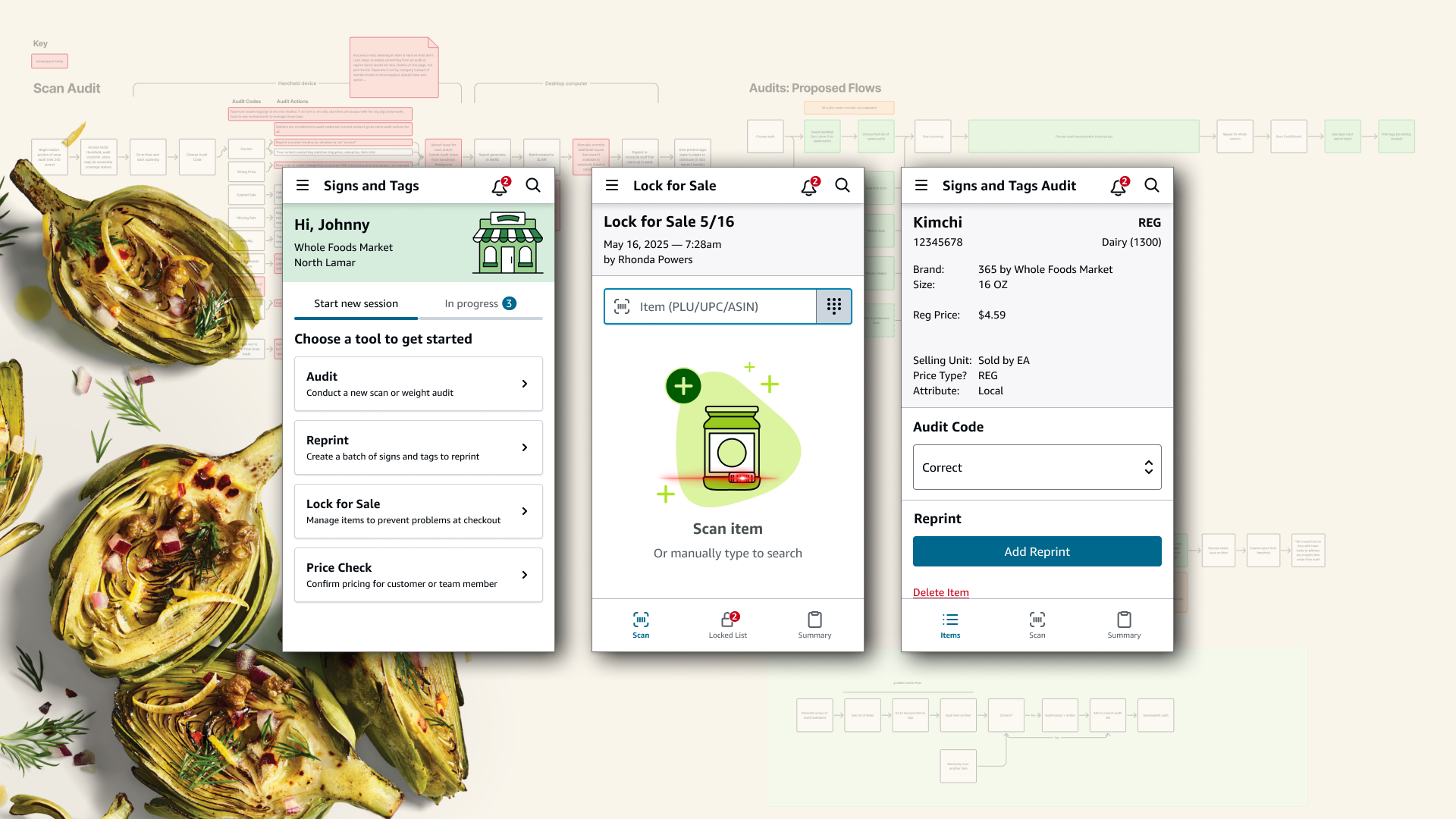
Whole Foods Market: Building a more scalable, self-sufficient product ecosystem
Summary
Designed the transition from a legacy third-party system to streamlined in-house experiences, reducing external dependencies and creating more cohesive, efficient workflows.
Role
Lead UX designer. I partnered with one PM. I collaborated with additional stakeholders for scoping/contextualization/buy-in: technical PM, legal team, operations team, auditor end user, order writer end users, ux design director, project management director.
Scope
3 month timeline, 2025
This began as a housekeeping initiative. Its legal implications brought it to UX, and I used that opening to challenge outdated development practices. The project became a case study in how design-led decisions unlock more value from legacy migrations without increasing resource investment.
Results
Replaced a feature-parity migration with a leaner, workflow-based design. Essential tool functionality was reorganized into a flow reflecting the more efficient real-world process, at no added development cost.
Made everyday tasks faster. Workflows now need 20-33% fewer clicks, and standard reprints are now zero-click.
Surfaced a hidden data integrity risk. Discovery revealed that price checks were being done through the audit workflow, so I proposed a dedicated Price Check tool that was added to the roadmap.
Changed how the org approaches first release (V0). I made the case for outcome-driven prioritization over feature parity, backed by field research and a handoff package built to outlast turnover.
Nationwide impact. The scale of this project impacts the auditor and handful of order writers at every Whole Foods Market nationwide.
Problem and context
Pricing accuracy tools need to move in-house
Problem summary
“STAR” (Signs/Tags Audits and Reprints) was a collection of tools used daily by in-store team members to manage paper signs and tags. These tools were hosted in a third-party environment and needed to be integrated in-house as part of Whole Foods Market’s ongoing mandate to operate fully within the Amazon ecosystem.
Stakes
“STAR” tools existed to maintain the 98% pricing accuracy legal required for all items store-wide. The timeliness of this project getting picked up was uncertain. Roadmap priorities kept shifting, so development stopped and started, which risked duplicated effort and rework. A solution needed a handoff that could withstand that.
Constraints
Development resources were extremely limited. The project was viewed as technical debt and a low priority. Support depended on a V0 narrow enough to justify the investment. A migration requirement was to translate all UI to fit into Amazon’s design system, Meridian.
The cost of preserving the status quo
Problem summary
The migration presented a risk of simply transplanting existing inefficiencies into the Amazon ecosystem. The dedication to parity was outdated and costly.
Stakes
Replicating legacy functionality without questioning its assumptions would carry cumbersome workflows into the Amazon ecosystem and create another generation of technical debt. Preventing that meant investing extra effort in discovery to build a case strong enough to stand against the default. If it backfired, it could damage both the UX team’s reputation and mine as a valuable contributor.
Constraints
A conflict existed between longstanding Amazon dev culture and the newer design-led agenda of Whole Foods Market UX team. The under-socialized nature of UX meant I had to do more heavy lifting.
Starting assumptions and what changed
Starting beliefs
The initial assumption was that, with sufficient research and legal cross-referencing, the existing suite of tools could be replicated within the Amazon ecosystem as the same bundle of standalone apps. The primary goal was feature parity with the existing tools.
Discovery and insights
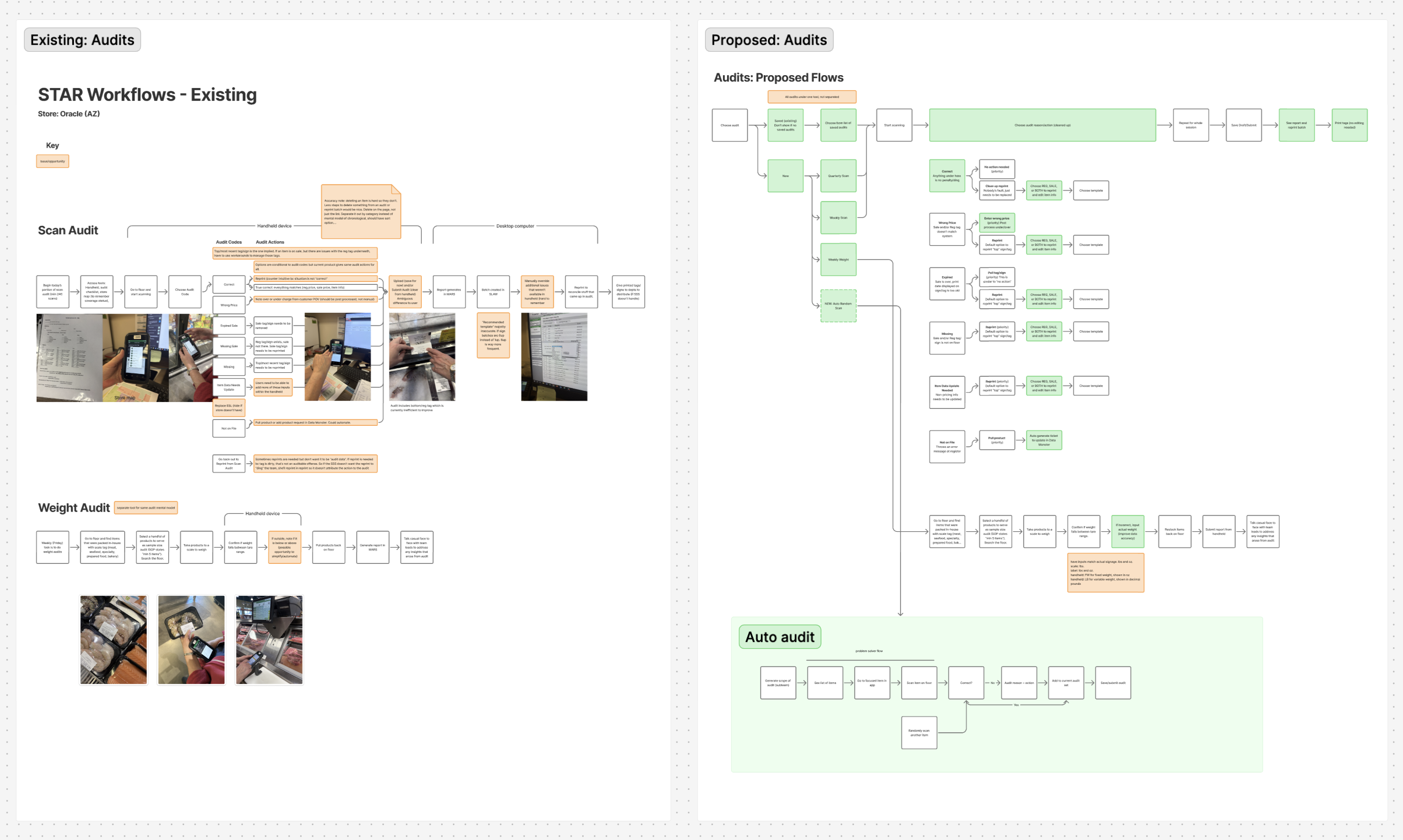
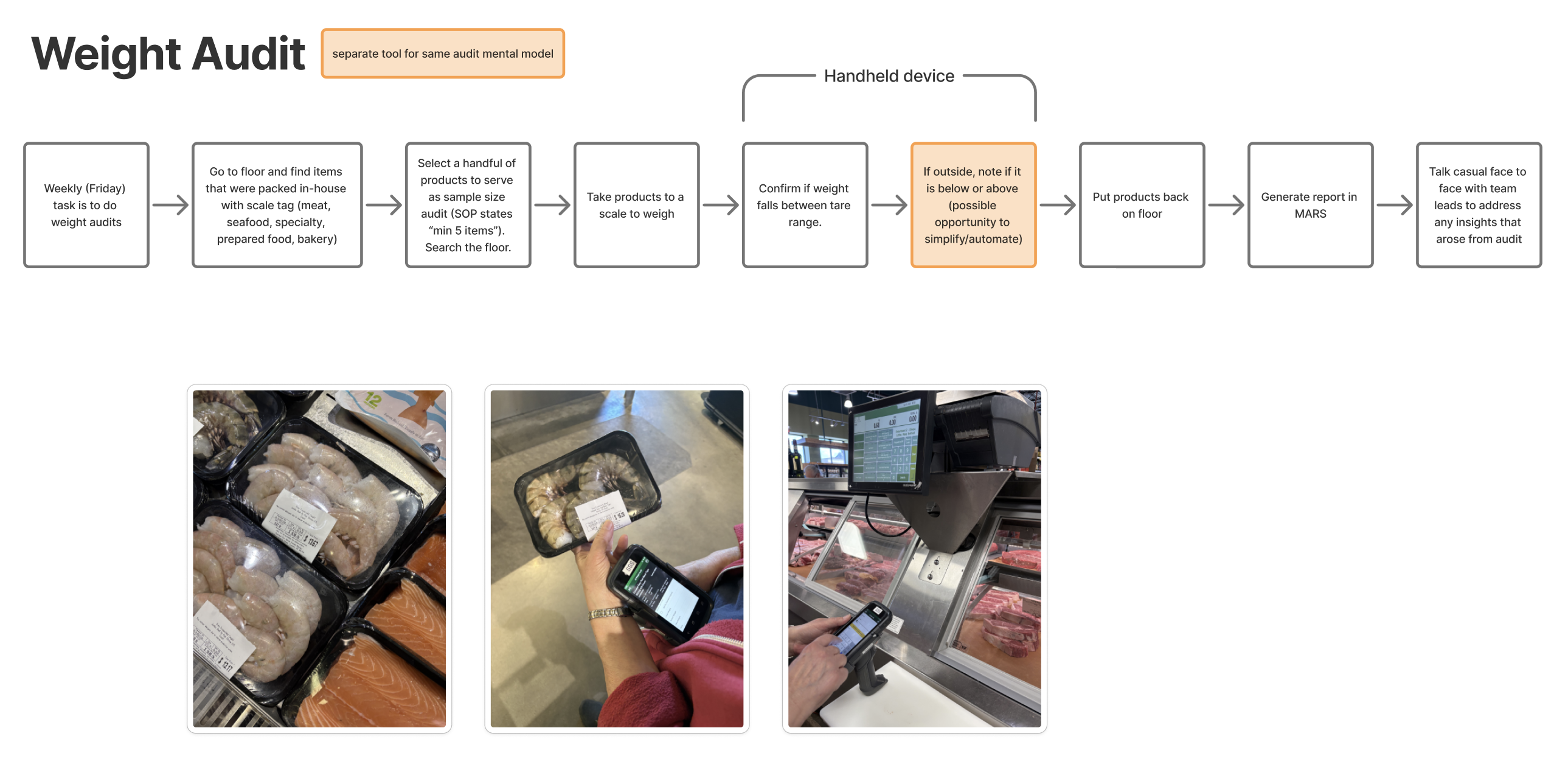
I conducted site visits and contextual inquiries with team members and charted their workflows, extending that documentation to the operational context around each tool. The tools had a purpose in supporting legal compliance, but in practice they were largely disconnected. Each fit more naturally in separate parts of the established architecture of tools and apps, so treating them as a unified suite didn’t make sense.
I also met with the legal team to understand their requirements, then cross-referenced those against the existing feature set. The current solution turned out to be overengineered, hurting the 98% accuracy goal more than helping it.
Pivots
Striving for feature parity quickly proved unwise. Recreating the existing, cumbersome apps would require more development effort than integrating their essential functionality into leaner, contextualized solutions. Pursuing parity would preserve existing process inefficiencies and perpetuate an unscalable and hard-to-maintain architectural pattern: a growing collection of niche apps lacking intuitive navigability.
A leaner, more integrated approach was clearly more beneficial for all stakeholders. However, departing from the status quo of the original mandate to achieve parity required a compelling, evidence-based case grounded in thorough process documentation.
My role and collaboration
Independent ownership
Discovery and testing
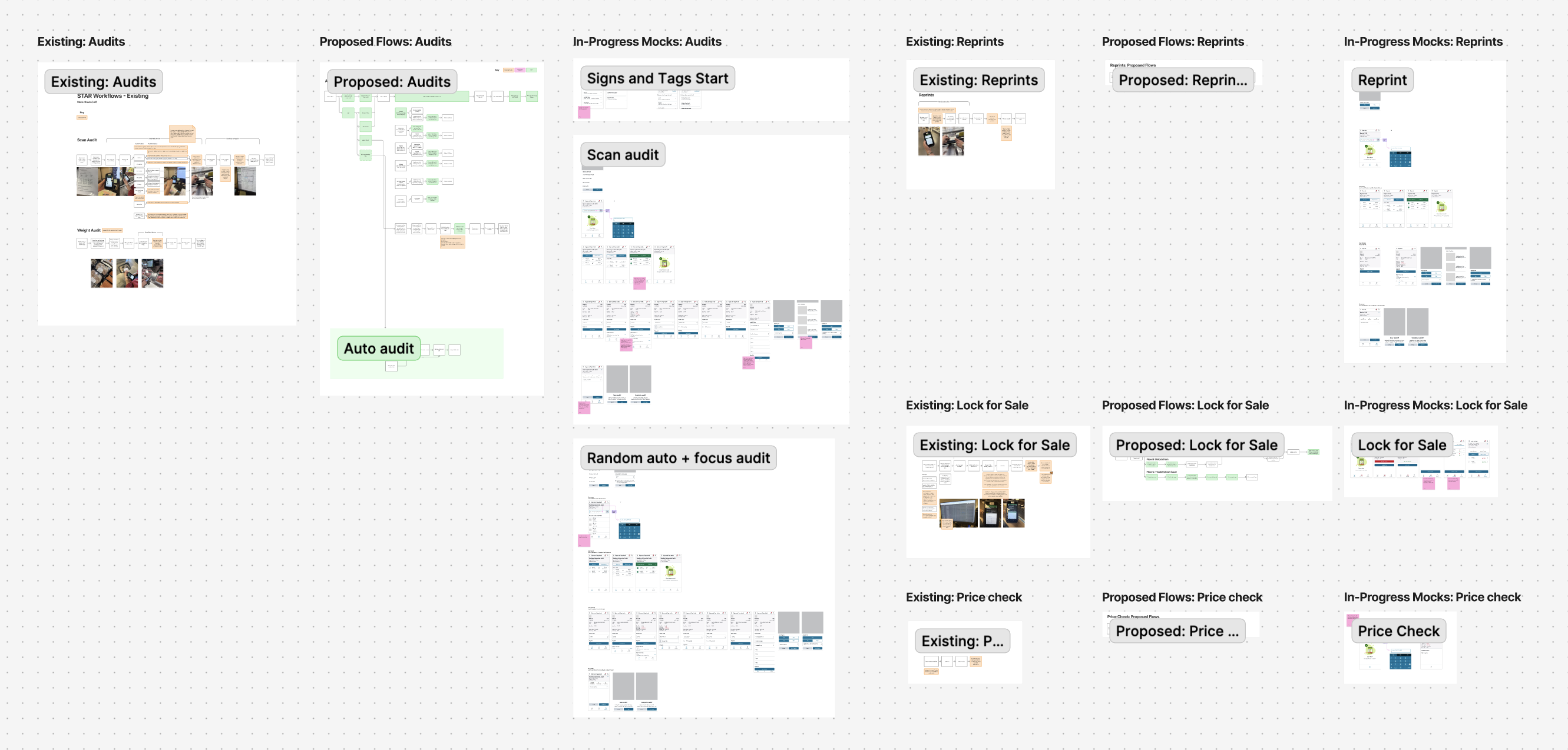
I owned the research strategy, determining the full scope of both discovery and usability testing. I advocated for regular store visits to gain direct exposure to real end-user behavior. I also maximized the user access I had by exploring beyond the acute problem space, uncovering broader solution opportunities. By establishing an ongoing cadence with end users, I was able to conduct candid, user-specific usability testing that generated invaluable insights.
Documentation and strategy
I owned the solution recommendations for both V0 and V1, as well as the proposed pathways for future iteration should this problem space receive additional prioritization. Beyond the immediate deliverables, I also owned the creation and packaging of comprehensive documentation for the project to serve as a case study demonstrating the value of UX-led decision-making.
Collaboration and alignment
Legal
The major priority of my work was disentangling the existing tool suite from the underlying legal requirements it was designed to meet. The legal team was instrumental in defining the constraints of the solution. Amusingly, for the first time in my professional experience, Legal actually helped broaden those constraints beyond the starting assumptions. This epiphany legitimized my recommendation to depart from the original brief and helped demonstrate to other stakeholders the greater strategic value of approaching this migration differently.
Product and Technical PM

Once I recognized how inefficient the path to parity would be, I knew that challenging the original direction would be a sensitive subject for devs. I kept the PM and TPM informed of my findings and brought them in early to advocate for a less conventional approach. As longstanding members of the organization, they provided candid insight into cultural and organizational dynamics, helping me understand which angles were most likely to garner support.
End Users and Operations
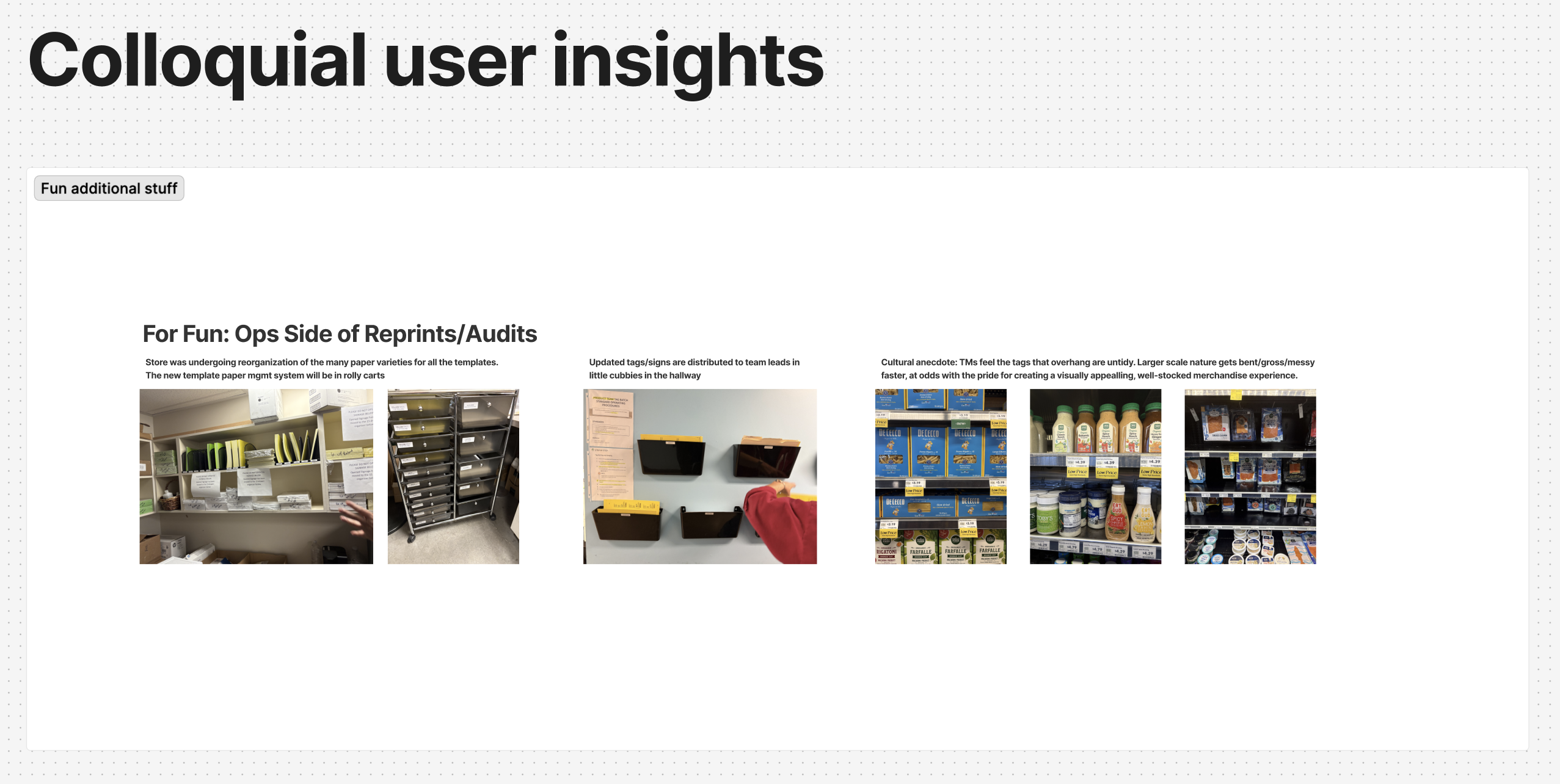
For each tool, I charted existing workflows, including photos I took in the field to bolster the narrative I was socializing. I called out areas of opportunity and presented these alongside proposed future-state workflows for clear comparison. I developed a regular cadence of working directly with end users to refine the proposed workflows, progressing from flowcharts to prototyped mockups. That regularity cultivated trust and more authentic feedback that was invaluable to me. I met with Operations to keep them informed and cultivate buy-in early, helping reduce friction and ease the eventual transition at nationwide launch. Meeting with Ops also helped socialize the benefits of their collaborating with UX.
UX and Product Leadership
Finally, I met with UX and Product leadership to sanity-check the organizational and cultural implications of my approach. Their support validated going beyond the technical scope and gave me the confidence to push the project’s impact further.
Key decisions and supporting artifacts
From parity to a co-designed parity-plus
Use design system incompatibility as an opportunity, not a constraint
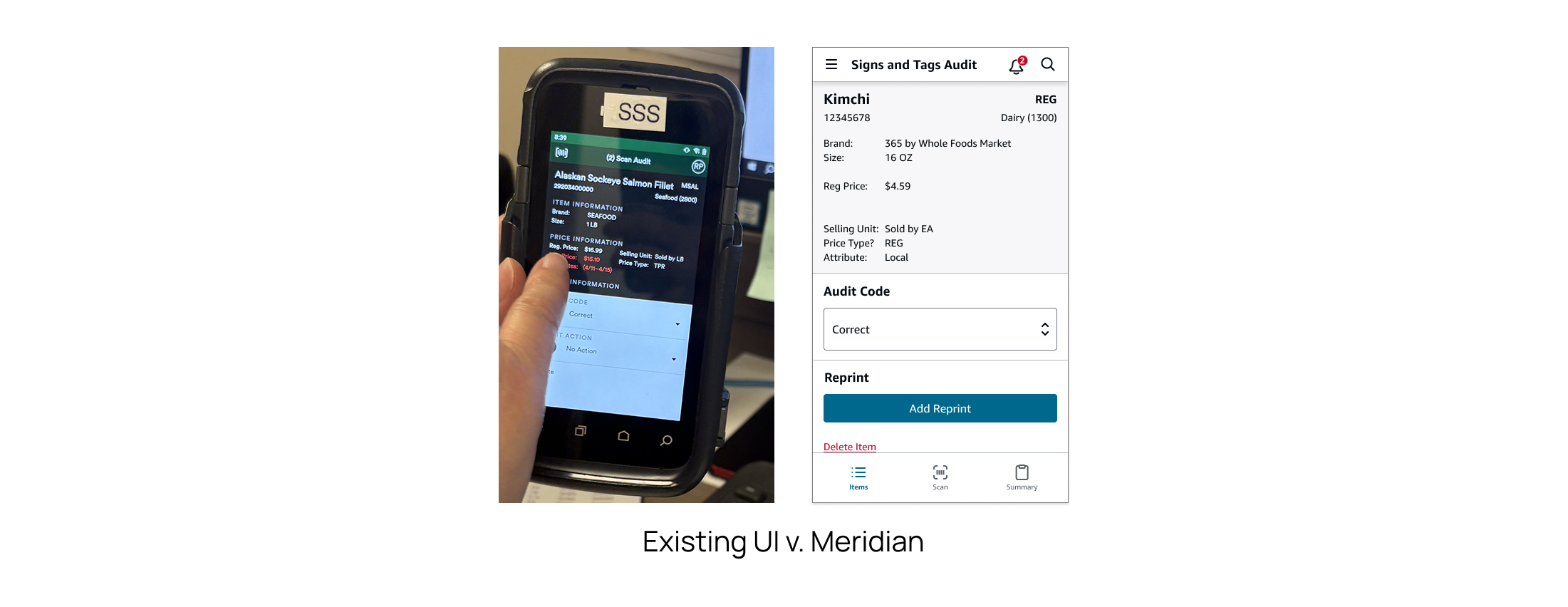
The fundamental spark for this project's strategic pivot was the design system. The third-party UI did not map directly to Meridian components, creating an opportunity to rethink the existing experience rather than simply replicate it. This opened the door to meaningful optimizations without increasing (and in some cases, reducing) the technical effort required.
Prioritize workflow context over application boundaries
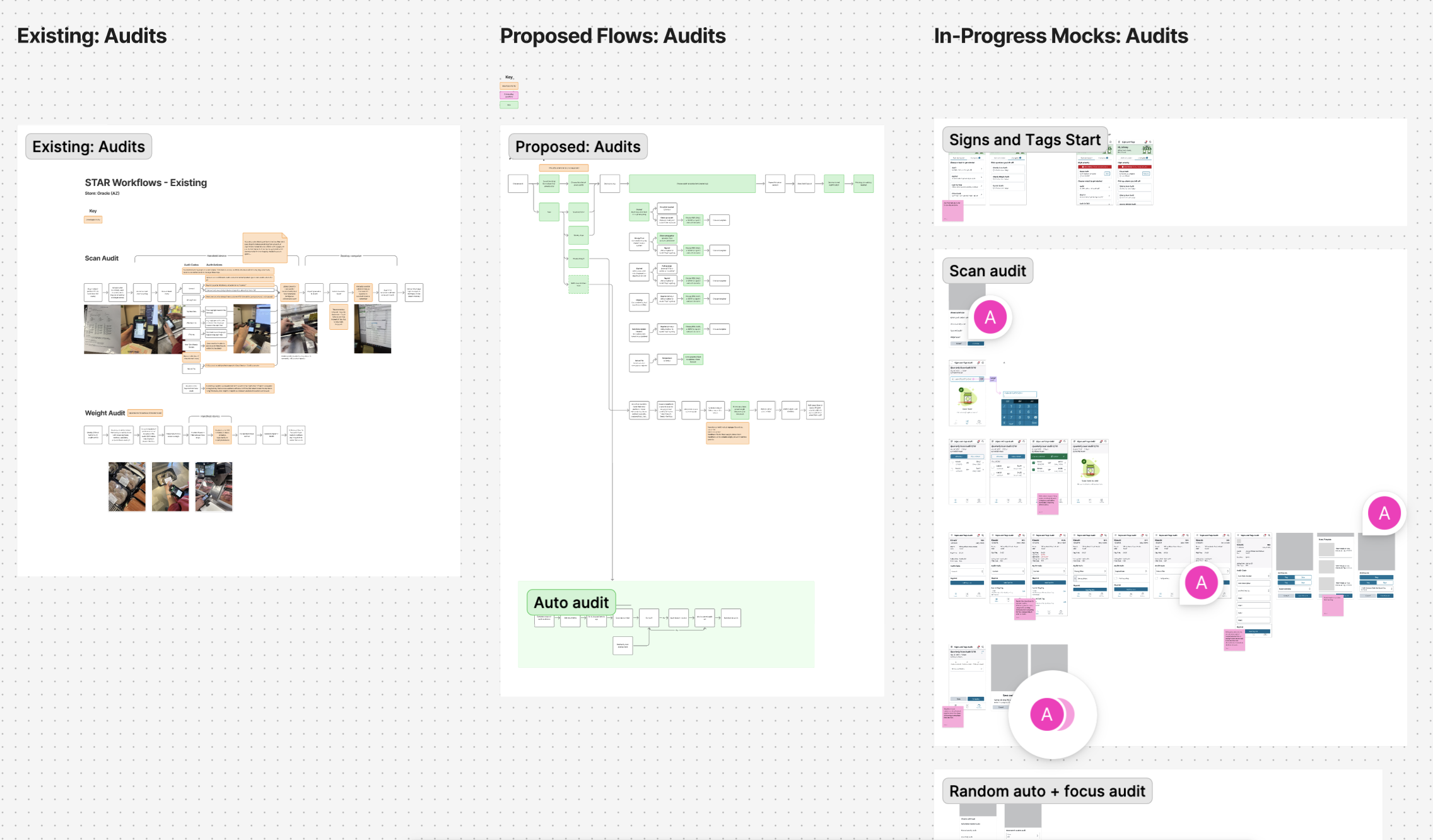
I chose to organize the solution around how team members actually worked rather than preserve the legacy division of features into standalone apps. End-user feedback became my most compelling lever for building stakeholder buy-in for this. What began as a migration chore focused primarily on cost savings through the elimination of third-party dependencies evolved into a path to unlock broader efficiency gains across everyday workflows. Anecdotally, it was sweet to propose improvements that would lessen the physical mobility burden for an older team member I collaborated with.
Expand discovery beyond the stated scope.
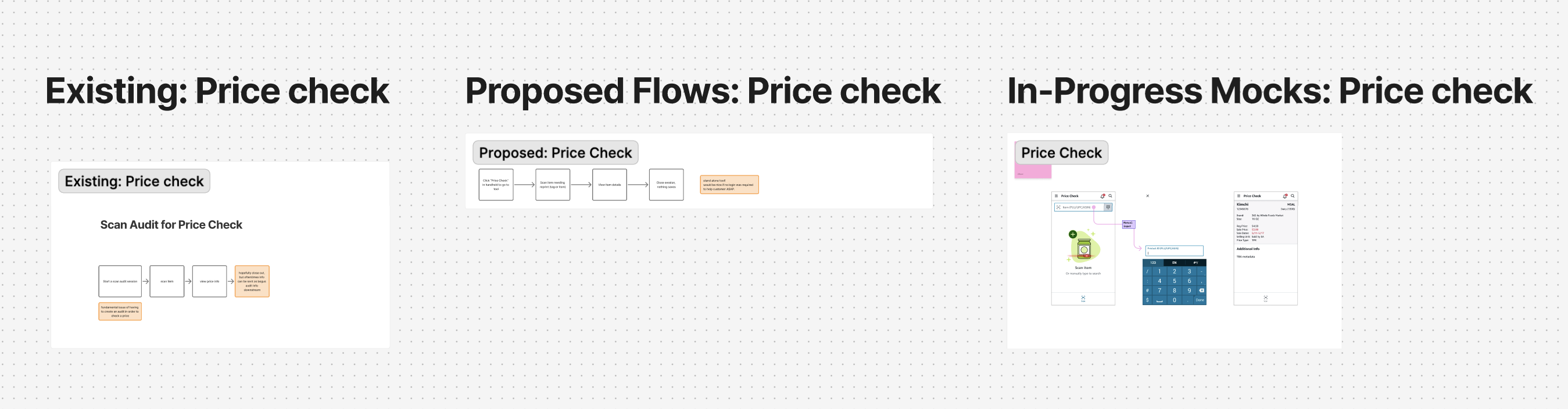
I deliberately investigated adjacent workflows, discovering complementary ways to integrate the features. This broader research also inspired possibilities for future automation and uncovered a ubiquitous vulnerability around price checking. The added benefit beyond the project was having such thorough context reflected in my documentation that stakeholders more easily viewed my perspective as legitimate and trustworthy, reducing friction in achieving alignment.
Outcomes and Impact
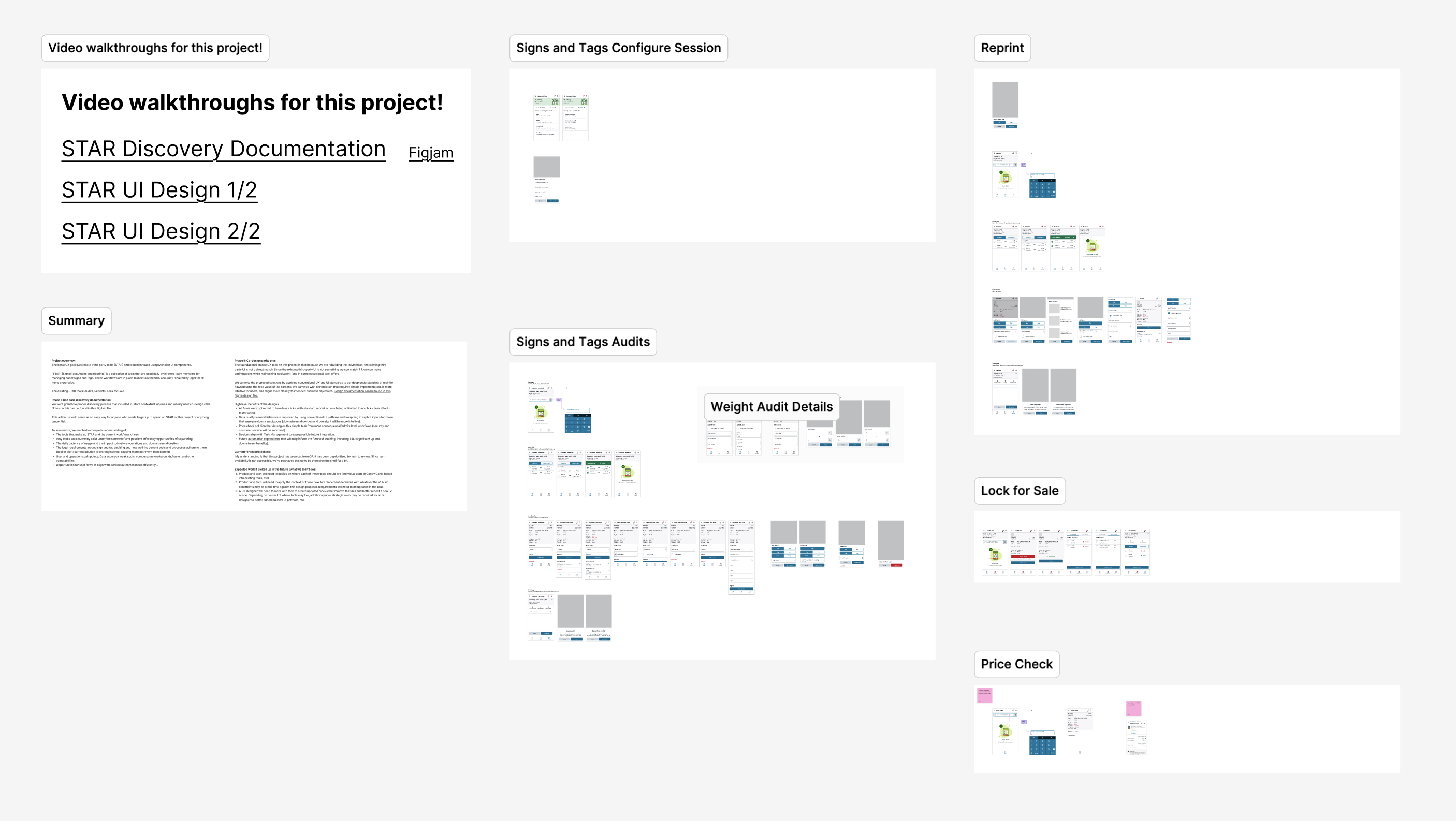
Strategic Product Direction: From Parity to a More Valuable Solution
I challenged the starting assumption, finding ways to create value beyond simply eliminating third-party dependencies:
- Reframed the project around actual user needs
- Established a path to avoid perpetuating unscalable architecture patterns
- Identified broader workflow optimization opportunities that extended beyond the original scope at no additional cost
- Influenced the roadmap by uncovering previously unrecognized needs
- Created a foundation for future automation and improvements to auditing workflows
Operational Efficiency and Data Integrity
Workflow efficiency
- Reduced standard reprint actions to zero-click
- Eliminated unnecessary steps, reducing clicks in every workflow by 20-33%
- Identified ways to reduce the physical and emotional demands of routine tasks
Data quality and error prevention
- Replaced ambiguous inputs with explicit interactions and conventional UI patterns
- Reduced openings for user data entry error
- Improved the reliability and consistency of information entering downstream systems, supporting easier data consumption and more intuitive operational oversight
Uncovered data integrity risk: Price Check
Discovery revealed a widespread but unrecognized vulnerability. Team members routinely used the audit workflow to price-check items for shoppers. Without a dedicated tool, they had to start an audit and then manually stop the interaction from saving and flowing downstream. The workaround was complicated, easy to get wrong, and only possible on a desktop computer, far from where the question came up. Although this was outside the original scope, I proposed a dedicated Price Check solution, and it was added to the roadmap.
Sustainable Architecture and Future Innovation
I approached the migration as an opportunity to create lasting value rather than simply replace aging functionality.
- Advocated for integrating tooling in contextually relevant parts of the architecture rather than recreating a hard to access hiding place of unrelated standalone applications
- Collaborated with other UX teams to align UI decisions with Task Management, supporting a more cohesive experience and easing potential future integration
- Explored automation solutions to inform the longer-term evolution of auditing workflows
- Called out solutions with upstream and downstream implications that extend beyond the eventual phaseout of paper signs and tags as electronic signage gains traction
Organizational Knowledge and Continuity
I created an extensive documentation package designed to preserve the value of discovery and strategic decision-making well beyond my involvement.
- Charted existing workflows with photographic evidence, contextual observations, and clearly identified friction points and opportunities
- Presented proposed workflows alongside existing processes to make the rationale for change tangible
- Developed V0 and V1 recommendations, along with pathways for future iteration if prioritization allowed
- Captured research findings, solution rationale, and future possibilities in a format accessible to future stakeholders
- The handoff was comprehensive enough to withstand employee turnover and extended periods of inactivity. Rather than leaving behind isolated design files, I converted the work into durable organizational knowledge that future teams could reference and build upon without repeating the original discovery
Trust and UX Influence
Beyond the immediate deliverables, this project demonstrated the value of UX as a strategic partner in product and operational decision-making.
- Built alignment across product, UX, operations, and development
- Used research to challenge inherited assumptions and build support for a higher value solution direction
- Helped stakeholders understand how UX research could uncover business risks and opportunities that were invisible from a purely requirements-driven perspective
- Demonstrated an ability to independently navigate organizational complexity, influence direction without formal authority, and translate ambiguity into actionable recommendations
- The quality and depth of this work continued to resonate with leadership well after the project ended. My ability to unpack complex problems, communicate them through digestible artifacts, and educate stakeholders on the value of UX was recognized and appreciated. I was subsequently invited to collaborate with additional Amazon teams beyond Whole Foods Market
Reflection: Designing beyond the brief
This project reinforced my belief that an early foundation of alignment breeds impactful design solutions. The stated goal is frequently disconnected from the underlying problem. By advocating to understand the broader context, I equip myself to question the original direction. That more adventurous exploration tends to reveal a path that creates greater value with fewer resources. That's what I champion.
Challenging assumptions is only as effective as the evidence and relationships used to support that challenge. Translating field insights into digestible, compelling artifacts made it possible to turn what initially seemed tangential to the scope into the prioritized, shared direction.
I continue to approach ambiguous projects with delight! Working at Amazon, where competing priorities operate at enormous scale, taught me to be ferocious when making my case. Now I'm more intentional about documenting what I recommend as well as why, the opportunities it yields, and how others can carry it forward.
UX’s responsibility is to understand the difference between delivering what was requested and solving the problem. From there, I build the evidence to align everyone involved and cultivate the trust needed to execute. Satisfaction and adoption follow.