Superintelligent: Making a voice AI interview agent easier to trust and use
Summary
Superintelligent was founded by an AI content creator whose first product was an educational video platform where people could build and showcase AI skills. As head of product and design, I took that platform from 0 to 1. When the company pivoted to selling AI enablement to organizations, I made its voice-based AI interview agent easier to trust and began reshaping the platform for corporate buyers.
Role
Head of product and design. I worked with the CEO and an AI dev shop (two AI engineers). The AI dev shop has their own case study on this project.
Scope
One month, 2025
A fast-moving project, spun up to build on enterprise interest in the content platform.
Context
Superintelligent began as a content platform where people learned AI projects and shared what they made. The education platform was attracting enterprise interest, and the interview agent was spun up quickly to build on that momentum, turning it into a longer enterprise relationship with more business impact than content education alone.
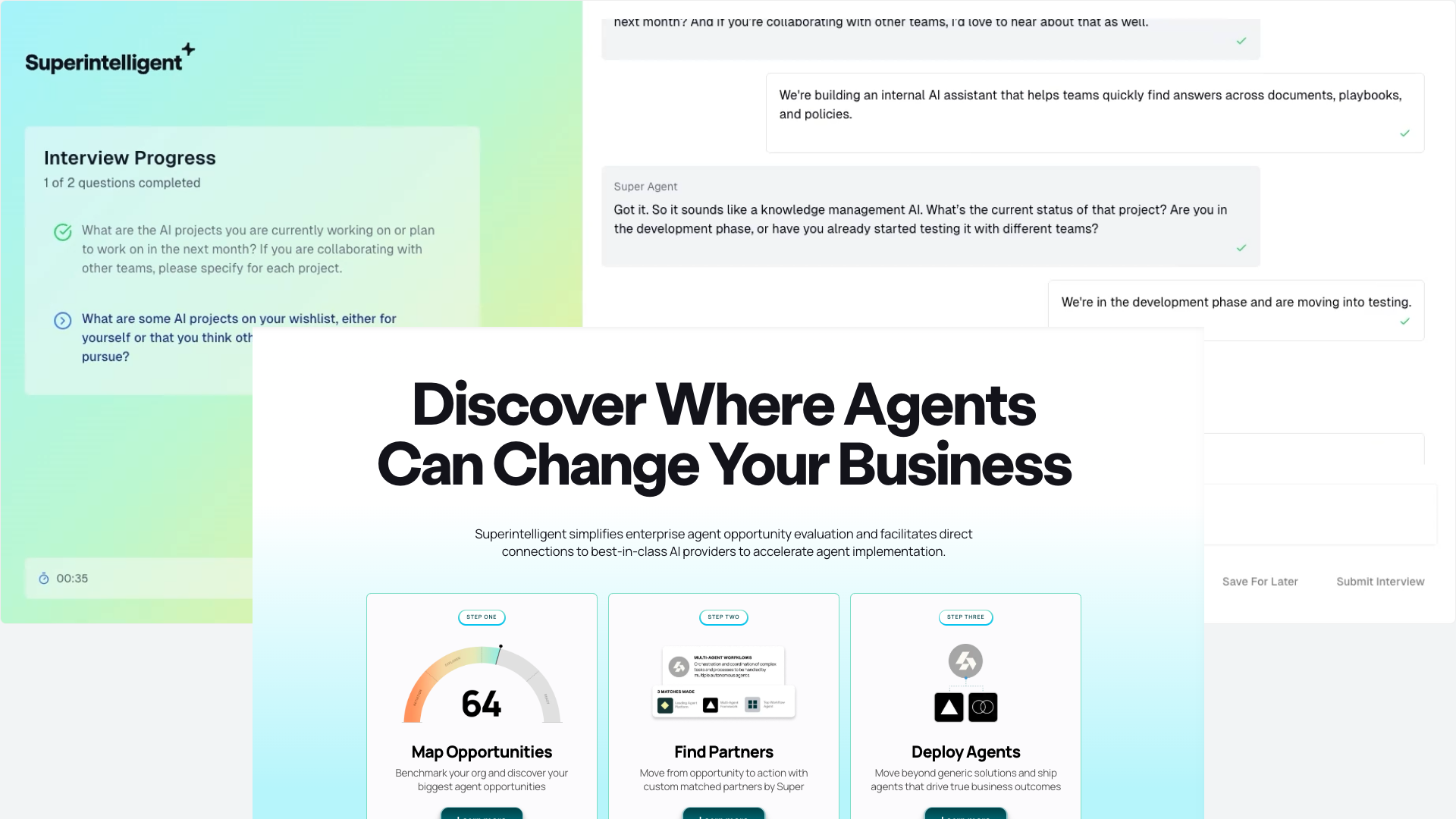
Superintelligent began to pivot to selling AI enablement to companies, with the video platform becoming a supporting add-on and proof of expertise. The core AI enablement offering became a short pilot for people looking to boost AI initiatives within their company. They take a survey, they and a few other stakeholders within the company are interviewed by a voice agent, then they receive a report with an Agent Readiness Score and tailored recommendations. The interface had started being built by the AI dev shop without design until I was brought in.
Results
Made voice recording feel safer. Shipped an explicit audio recording opt-in with clearer button hierarchy. Usability testing showed the stress of recording audio was higher than it needed to be, and the opt-in helped.
Opened the agent to more people. Shipped a text alternative with fallback messaging for anyone unwilling or unable to use voice.
Gave the interview a stronger starting point. Shaped the question goals to steer open-ended conversations toward where the agent could add value, and proposed beginning with conditional logic before handing off to the agent.
Began reshaping a consumer video platform for corporate buyers. Shipped light mode, a more professional tone, and descriptive thumbnails. Defined enterprise features (admin roles, departments, manager tracking) and a peer registry, which moved into development.
Making a voice agent feel safe to talk to
Once the human user clicked to initiate the experience, the voice recording started implicitly. This was too hard for people to notice, leading them to feel confused and sometimes creeped out. Usability testing showed that the stress of recording audio was higher than it needed to be. This experience worked against our goal of easing people confidently into using AI. It had to be improved.
- I defined an explicit opt-in for voice recording, with clear button hierarchy, so people knew when they were being recorded and more intuitively learned the back and forth.
- I designed fallback messaging and a text input alternative for people who weren’t willing or able to use voice.
- Both shipped, and the opt-in helped.
Giving the agent a better starting point
Usability testing began with Superintelligent staff dogfooding the agent. Platform engineers, sales, and the content production team all had a broad spectrum of AI competency which helped surface actionable feedback. All of the usability testing showed that the original prompting was too open-ended. Inexperienced people were confused from the start, and those with context and expectations were confused by the output.
The initial agent was too open ended for our goals. People arrive at this agent because they need help. The first experience needs to be successful in signaling that it will be helpful. I shaped the question goals to add context and steer conversations toward where the agent could add value. I proposed starting the experience with conditional automated logic and passing people to the agent after that. My concern matched the AI engineers’: without enough training data for specifics, broad prompting is brittle.
I documented my findings and mocked up visuals to demonstrate my proposals and shared them with the team. I defined the opt-in behavior, button hierarchy, and fallback needs, all of which were immediately prioritized and the dev shop built the UI.
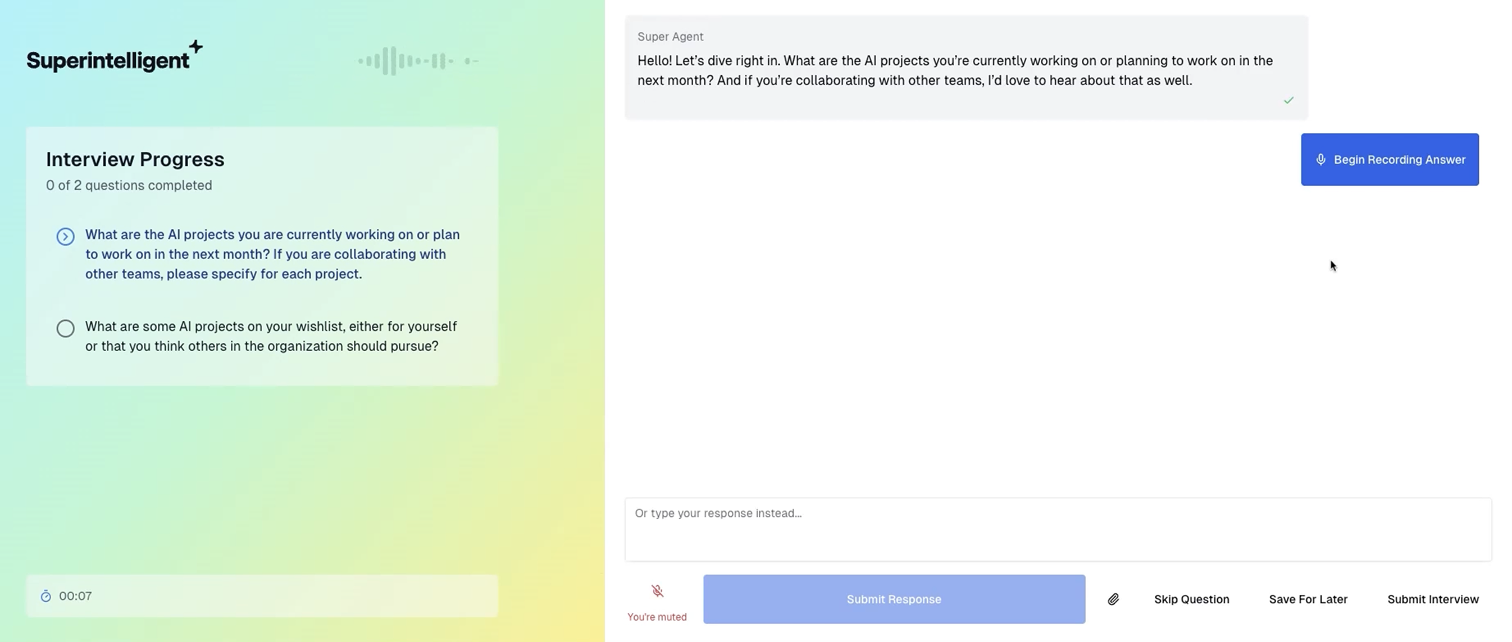
Shipped: explicit opt-in to begin recording (built by the dev shop from my direction)
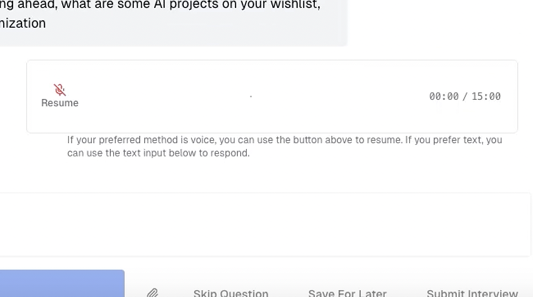
Shipped: support for text input (built by the dev shop from my direction)
Why the team kept the AI-led experience
Showing AI in the experience was a sales strategy, a way of demonstrating to buyers that Superintelligent could actually use it. I kept improving the experience within that constraint.
Reshaping the existing content platform for corporate use
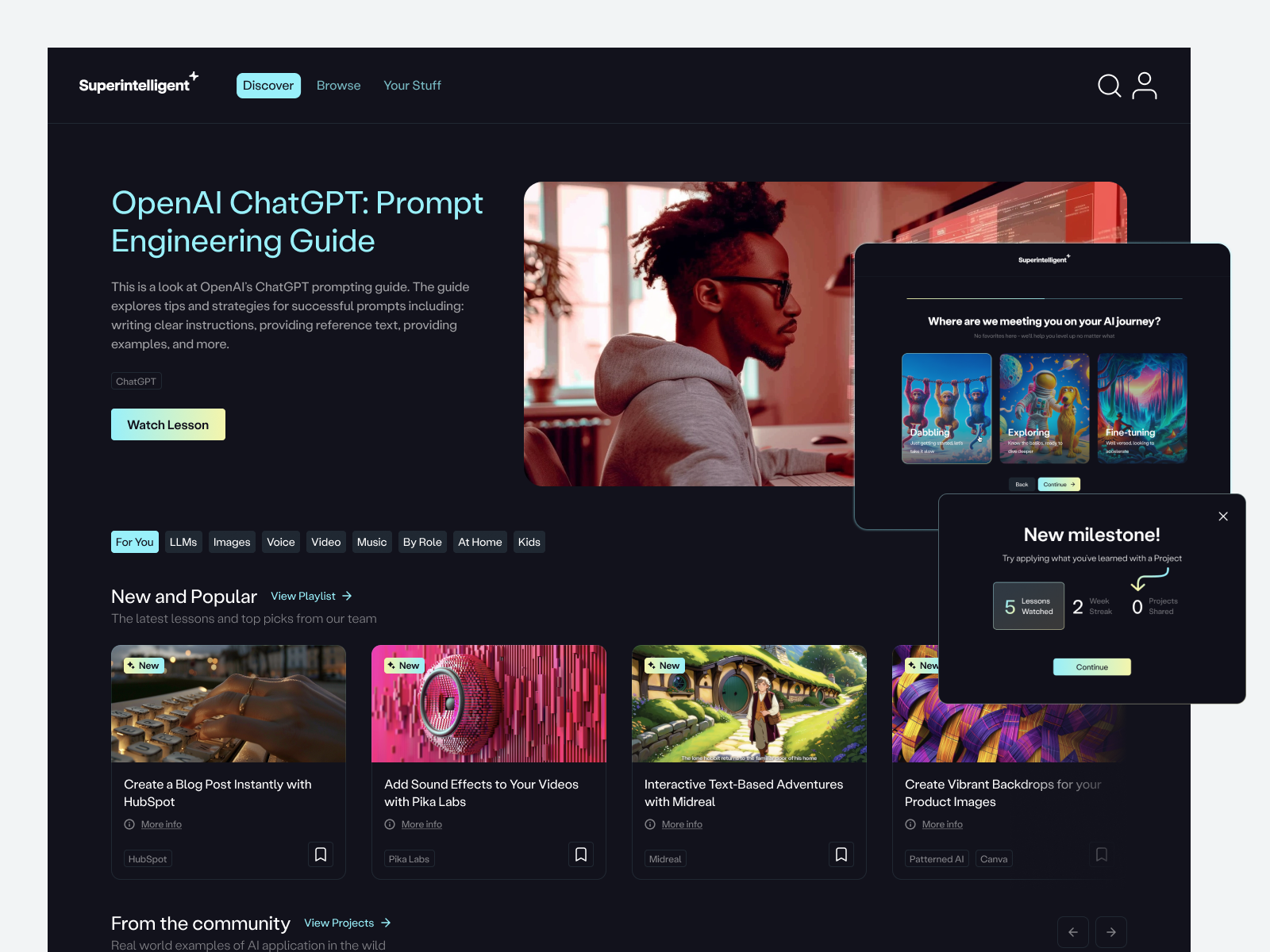
Existing consumer platform I had built from 0-1 at company's inception
I moved it from a fun consumer product to a corporate one that would prove the roots of our mission of AI enablement for all and strengthen the enterprise sales process:
- Tone changes: Copy updates and plainer, more descriptive video thumbnails (shipped)
- Dark mode to light mode (shipped)
- Rebranding the experience from strictly top-down education to also a peer "registry" so that users can add their AI use cases for others to adopt (development started)
- New enterprise features and account configuration including user admin roles, departments, and tracking and oversight functionality for management (development started)
- Designs for how to add interview agent into the end user experience (added to roadmap)
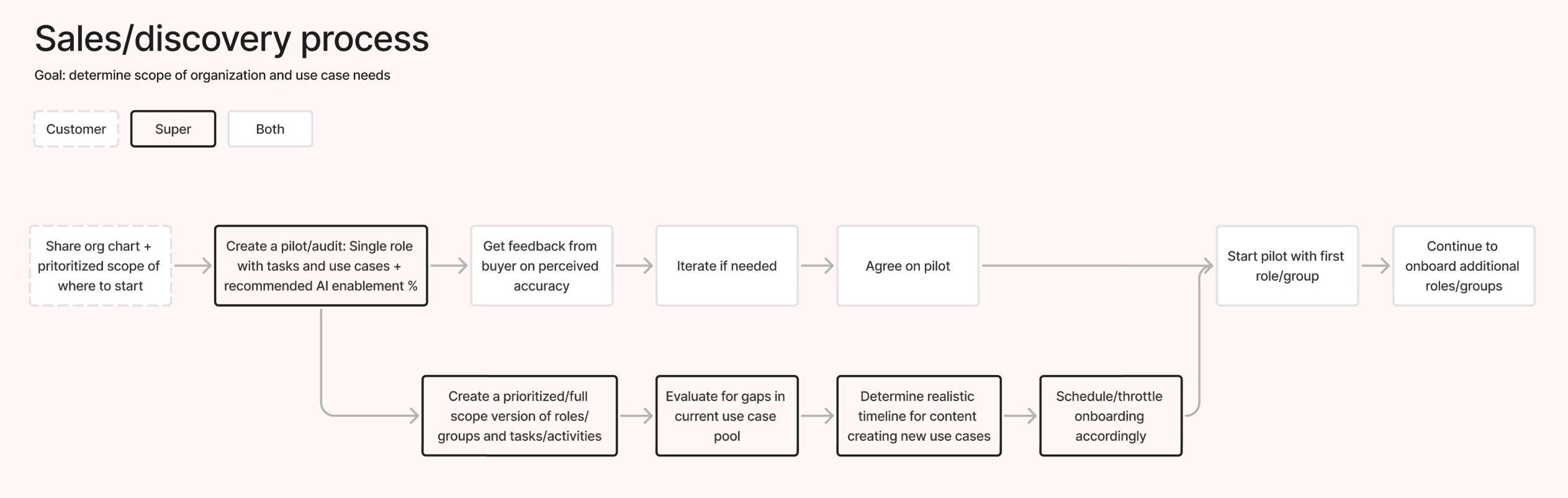
Proposed flow for how to tie Agent Readiness Score into platform customization
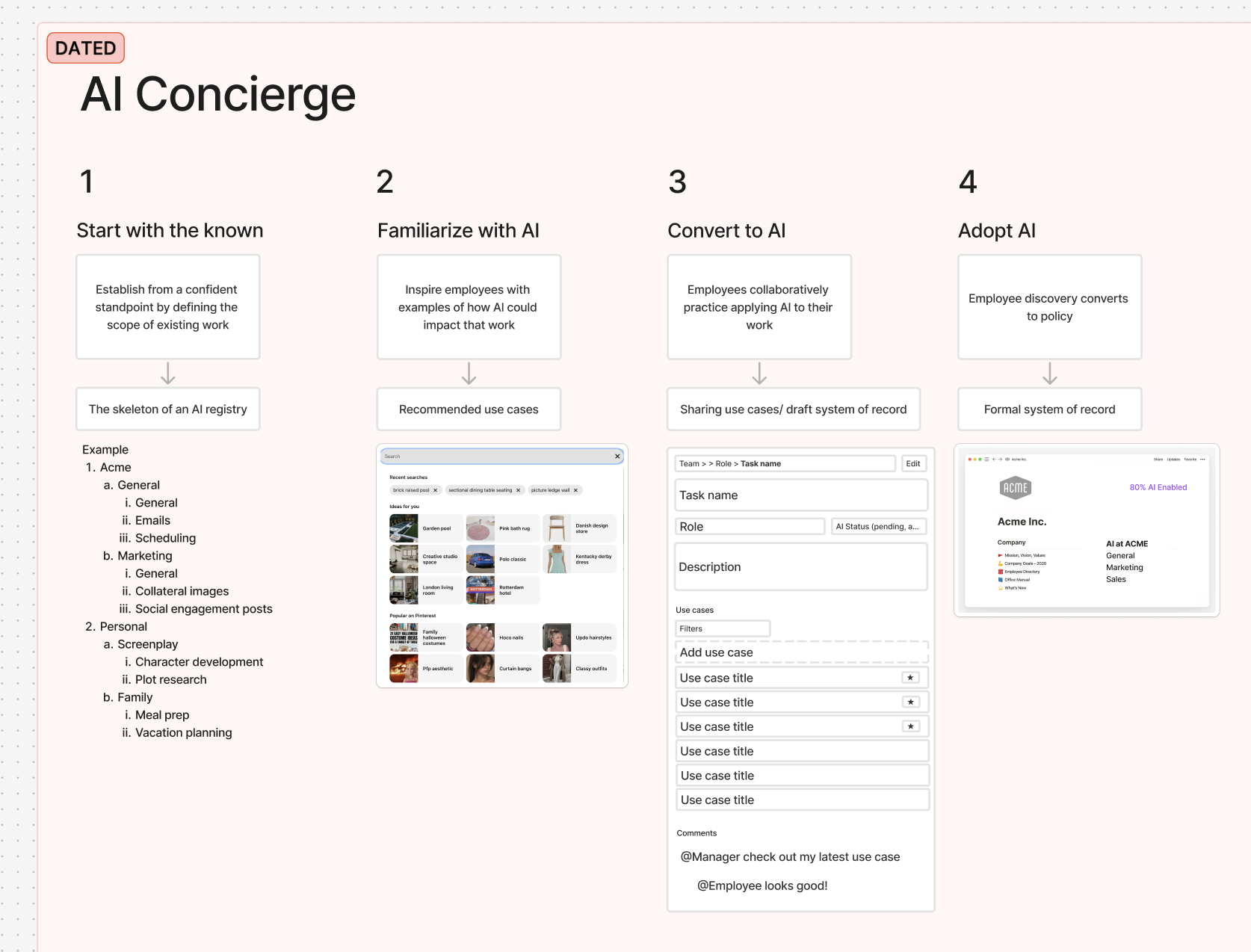
Initial framing for developing agent-powered AI adoption for employee platform users

Lo-fi wires for registry onboarding for different enterprise user types
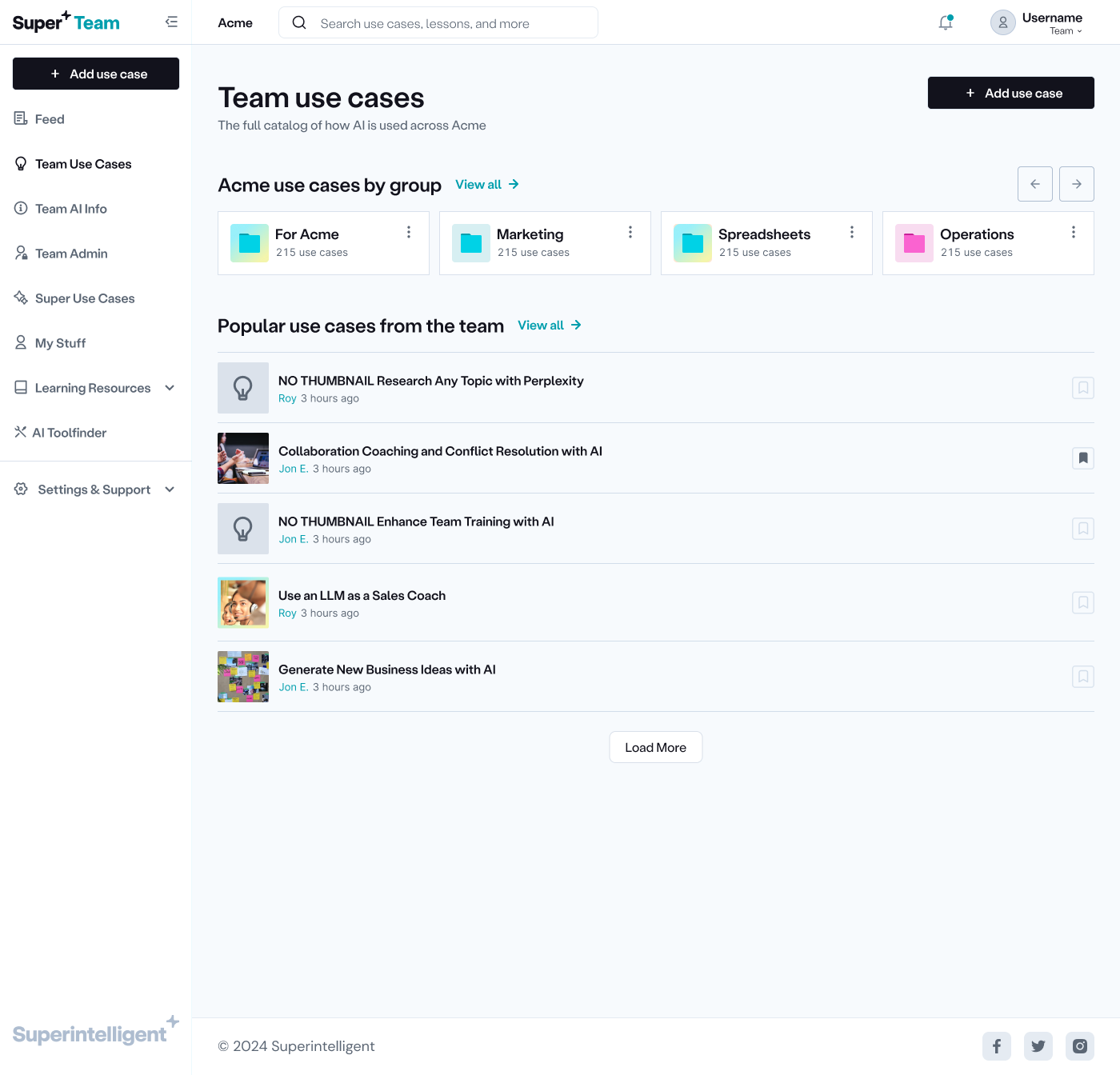
New corporate light mode with enterprise organization layer
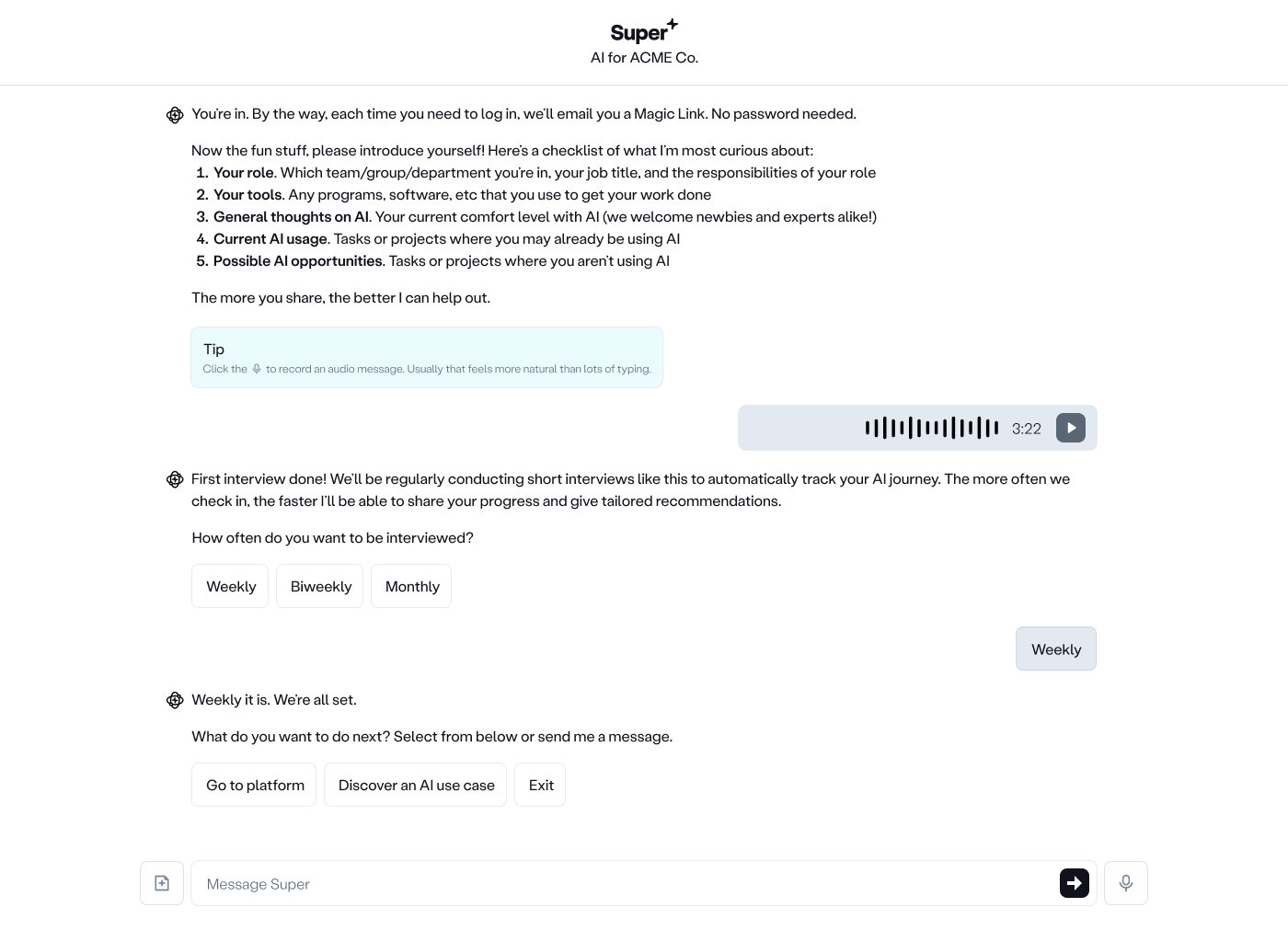
Exploration in broadening impact of interview agent: Customer onboarding and ongoing progress monitoring
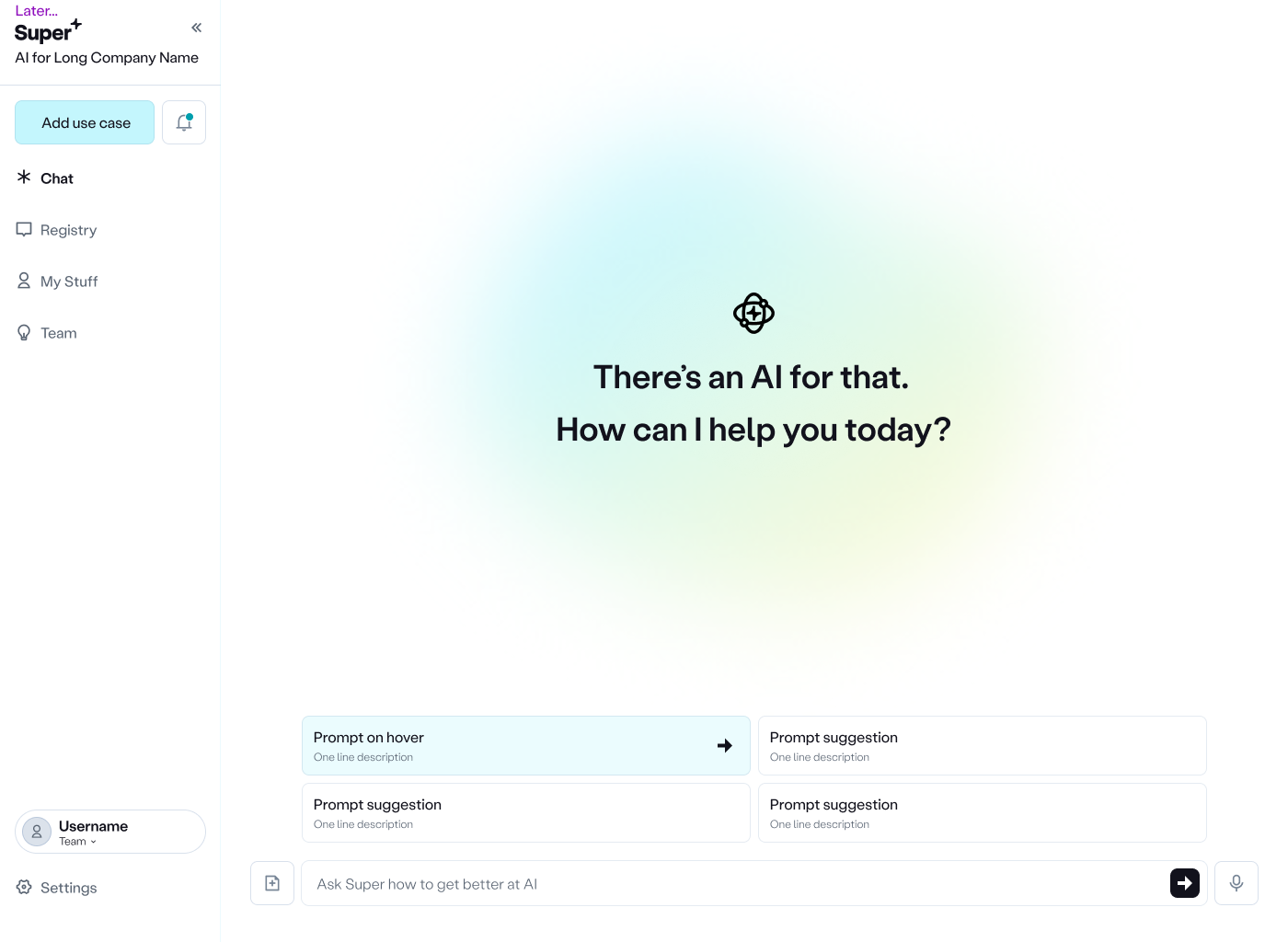
Exploration in broadening impact of interview agent: Customer platform engagement
What happened
I took the agent work through dogfooding. Sales and the CEO ran the client pilots after that.
As for the content platform, while it was a success for the consumer side fanbase, their demand for new content outpaced operations. The enterprise platform was heading in a direction that didn't rely on Superintelligent content production as heavily. Depending on the enterprise success of the platform, future outcomes pointed to fully pivoting to registry-only enterprise with no direct consumer platform, or possible full platform deprecation in favor of a consultation-only offering.
Reflection: AI enablement is still an enigma, the standards are still being written
AI enablement is still an enigma. Everyone wants it, and even the experts don't fully know how to do it. Unlike SaaS, AI does not yet have a proven pattern of standards for adoptability. The first moments of an AI experience decide whether people trust it to continue, so that's where I start. Adding structure helps bridge technology limitations with the human need to feel in control. My goal is striking a balance between experimental use and an intuitive, aligned experience that provides tangible value.